Agents, Automation, Intelligence, Integration
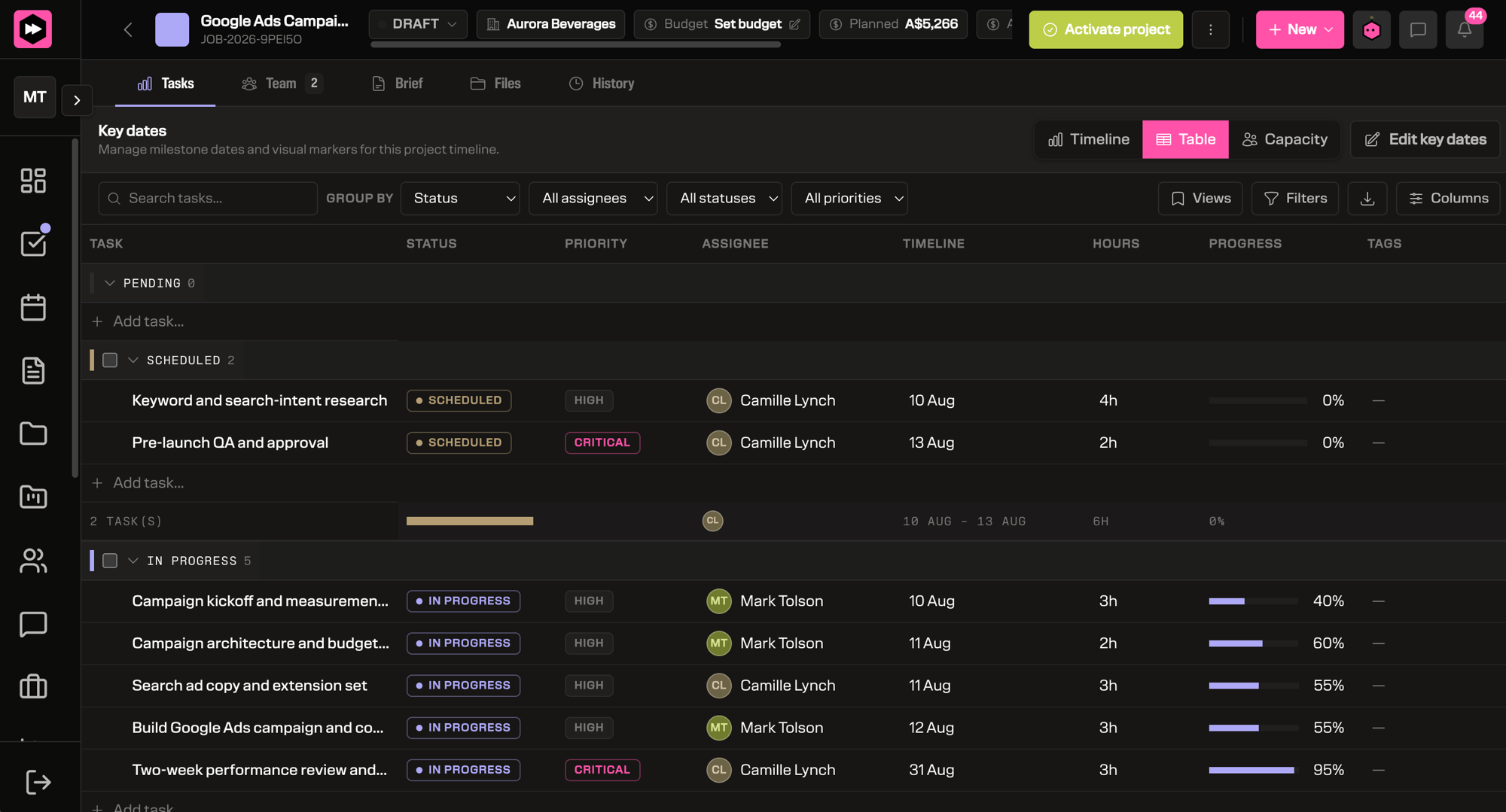
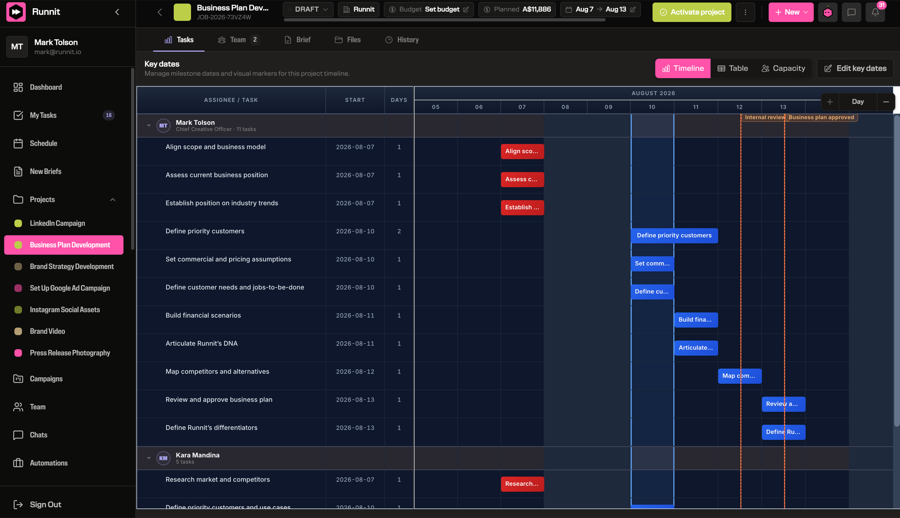
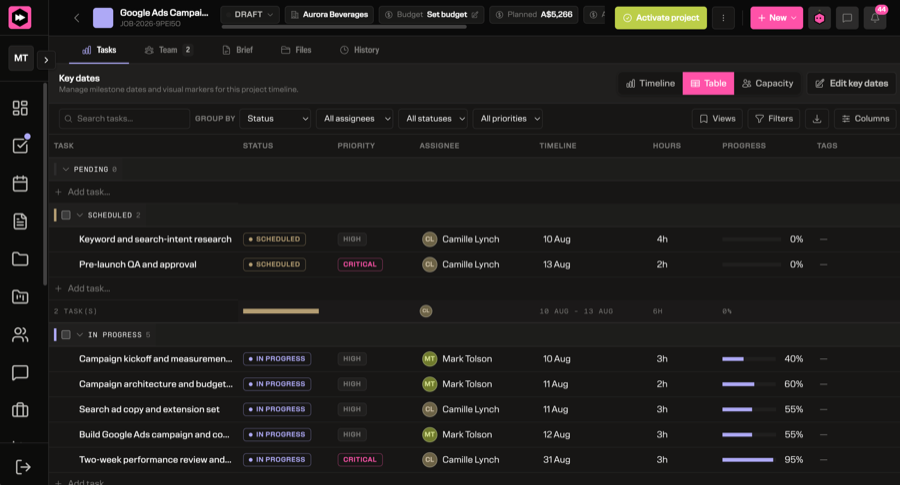
A complete plan, from one brief
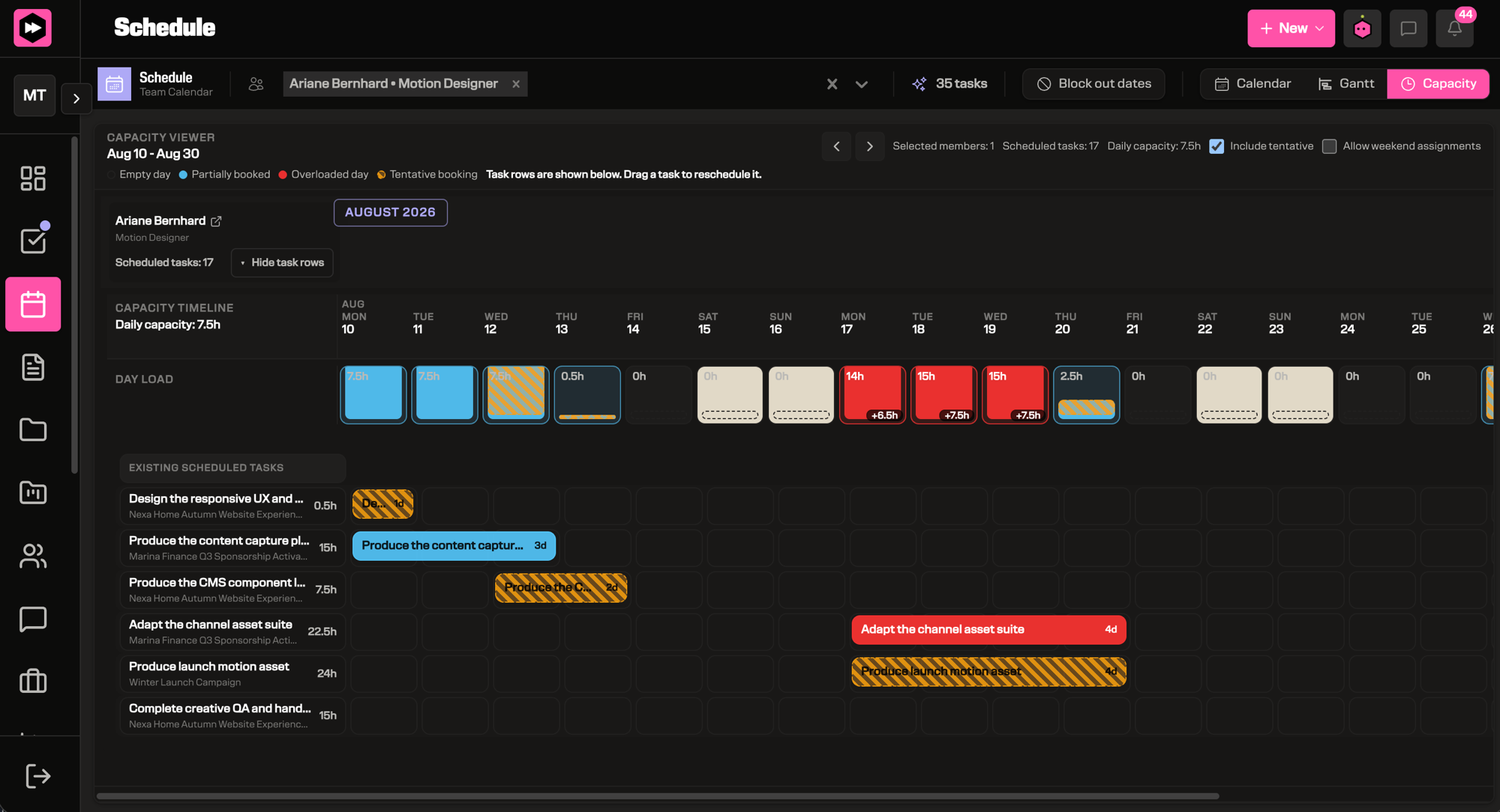
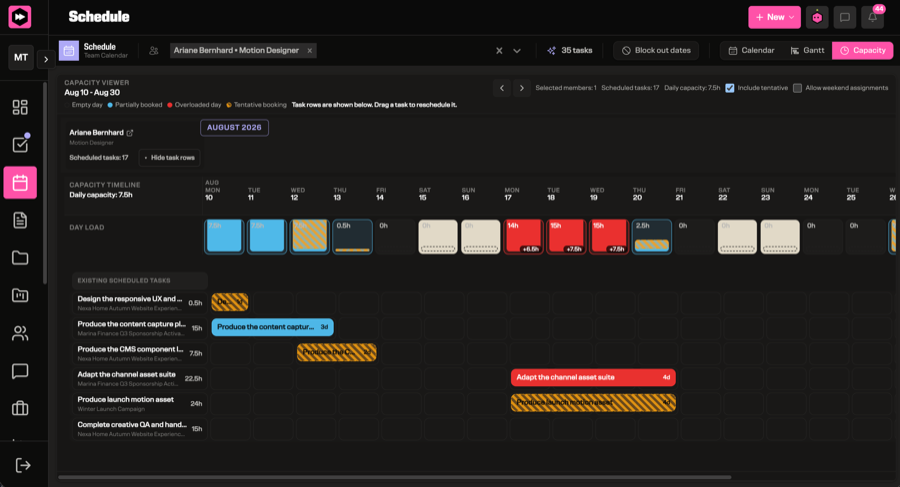
Tasks, timings, budget and capacity, generated together and accounted for
against what the team actually has free.
Every plan draws on the same centralised knowledge base: the client's details,
the brand's rules, and the operational processes your team actually follows.
Nothing is generic. The plan arrives already shaped by how you deliver.
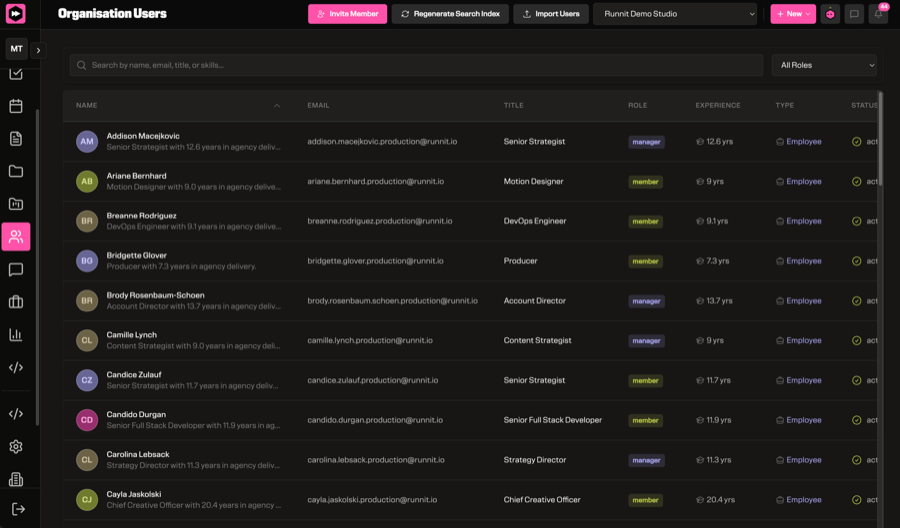
Staffing works the same way. Runnit matches skills, seniority and live
capacity to assign the people who best fit each role and genuinely have the
hours. Everything is taken into account, so the plan you approve is as close
to reality as a plan can get.
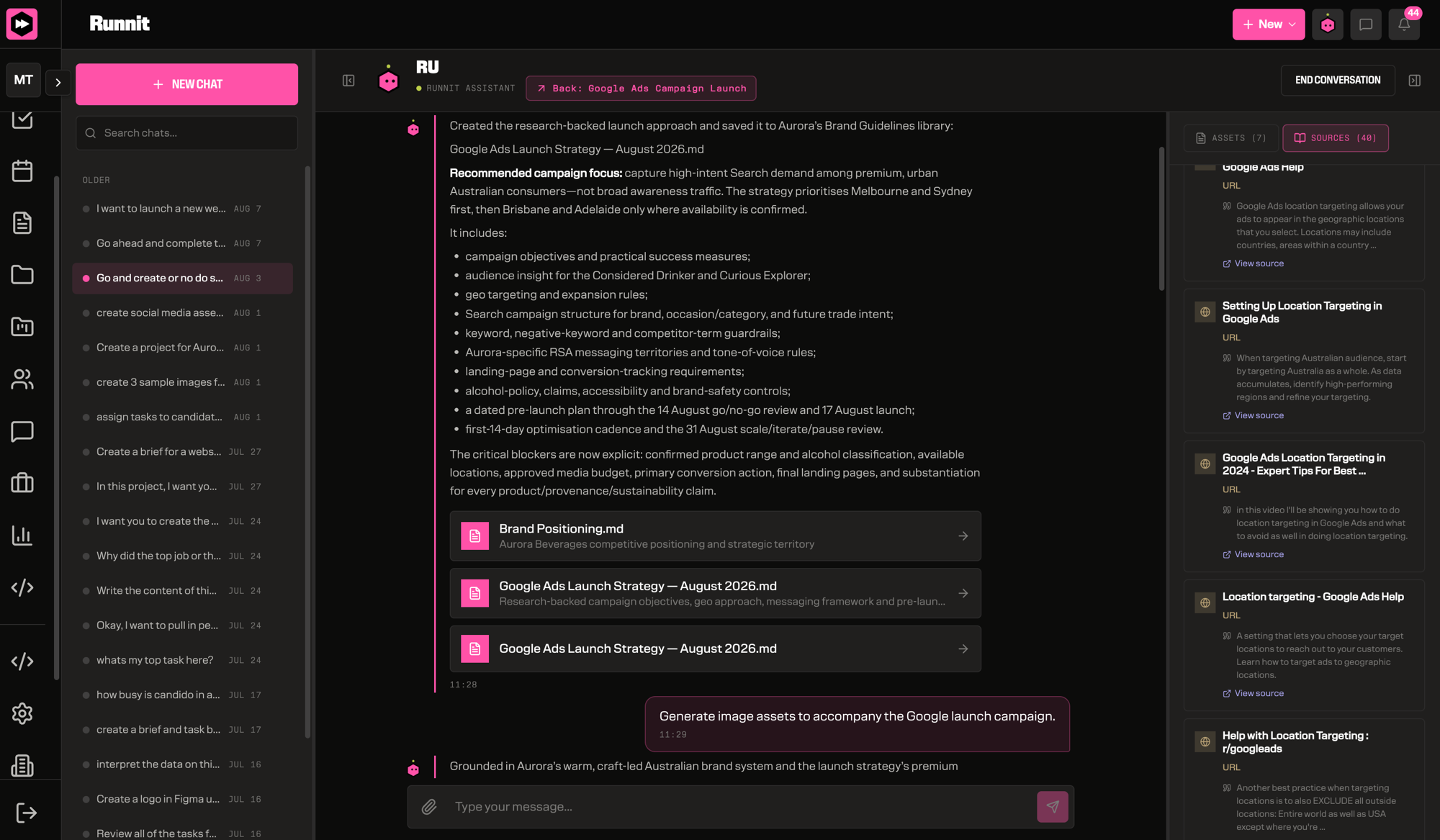
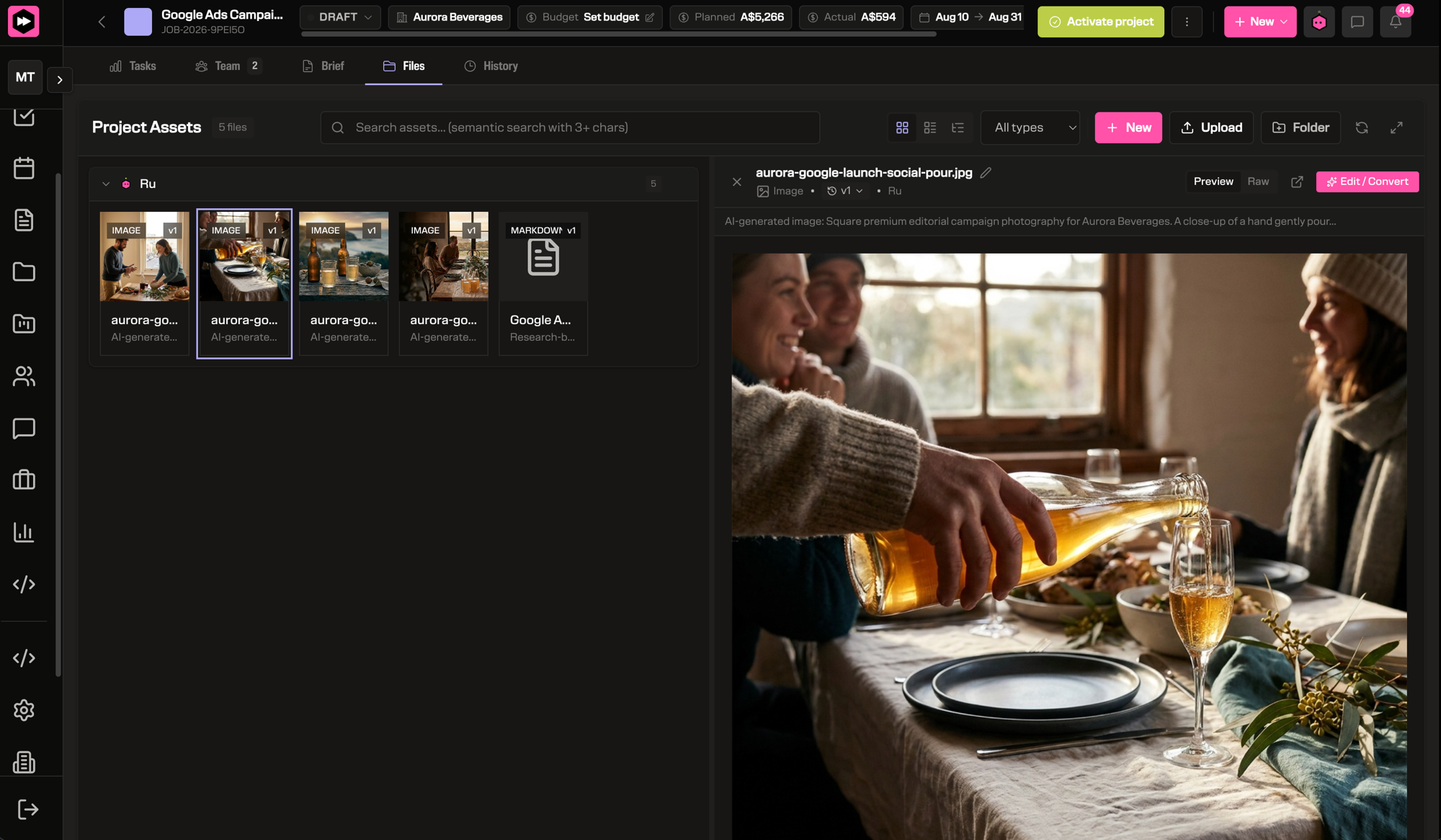
On brand by default
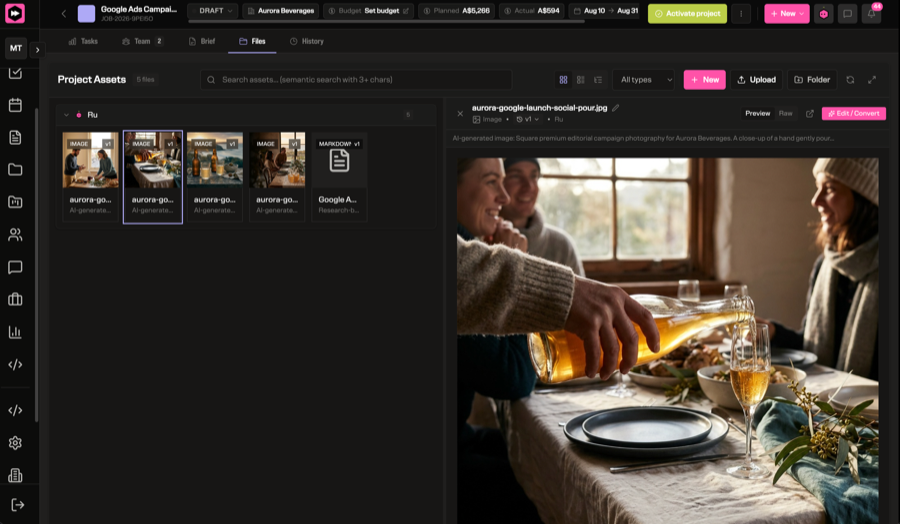
Research, ideas, images and video, made from a brief that never left the
project. Nothing briefed twice.
Everything generated inside Runnit runs on the latest frontier models, with
complete access to your organisation's knowledge: the client, the brand, the
project, and everything you have stored against them.
That access is the difference. A model is only as good as its context, so the
work comes back as accurate and as on-brief as the information you hold in the
system. Add a client's details once. Every image, video and line of copy after
that starts closer to finished.
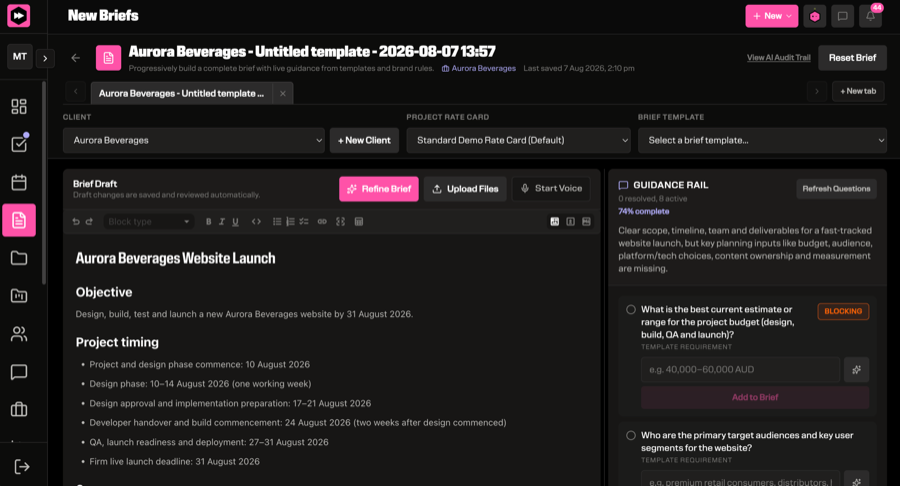
Every project inherits its brief
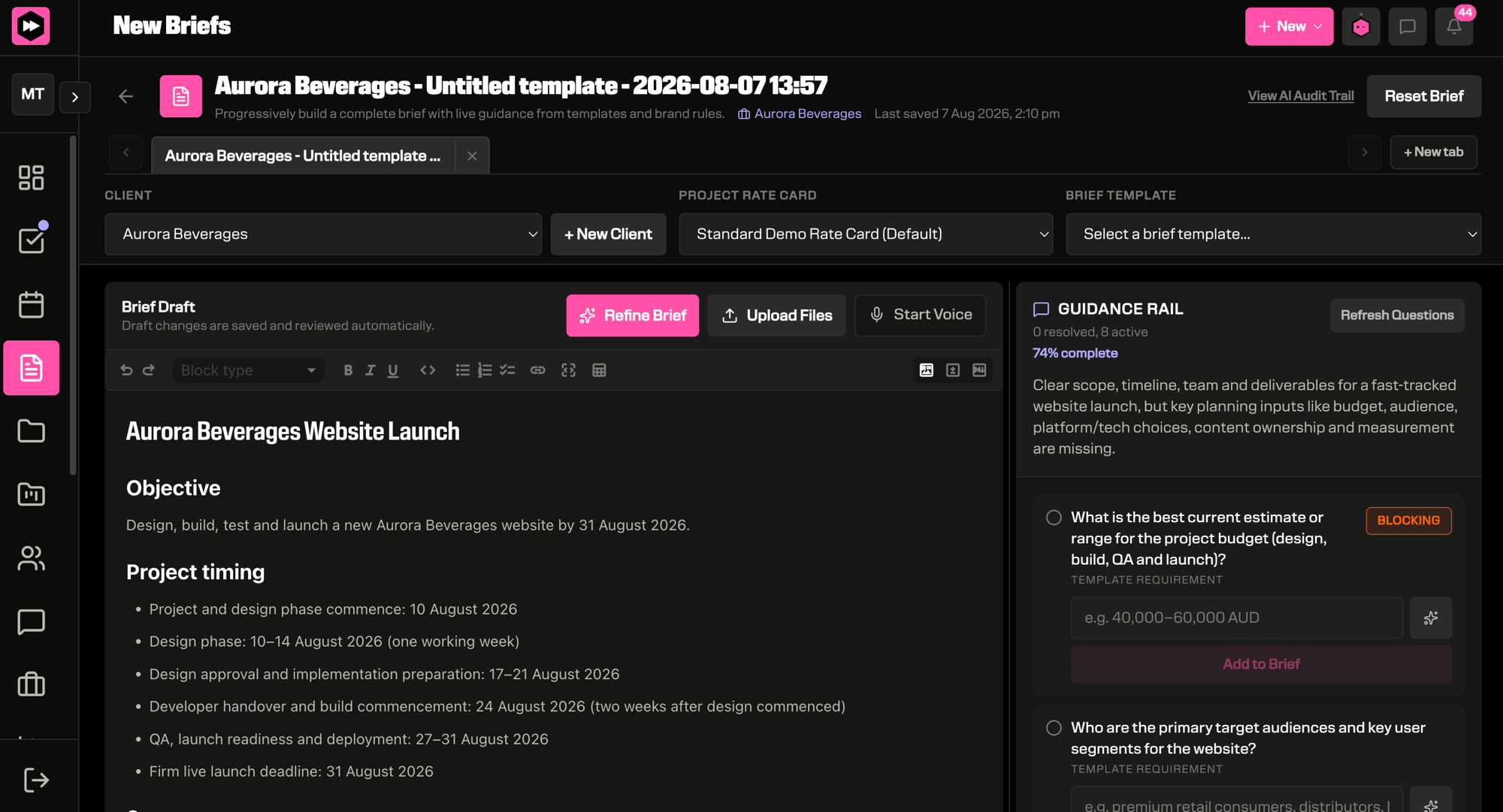
Brief Builder works from your team's briefing standards and each client's own
requirements, asks for what's missing, and catches what can't all be true.
Complete, validated briefs, every time.
Anyone who has pushed a thin brief to a creative team knows the sequence. The
first concepts answer the wrong question. Assets arrive in the wrong formats
because nobody wrote the specs down. Mandatories surface at client review and
the layout starts again. Deadlines move while answers are chased
mid-production, and the revision rounds eat the margin the job was quoted on.
A complete brief up front is the cheapest quality control there is. Less
rework, fewer revisions, and fewer jobs that quietly slip past their budget.
A gap caught at briefing costs a question. The same gap caught in production
costs the weekend.
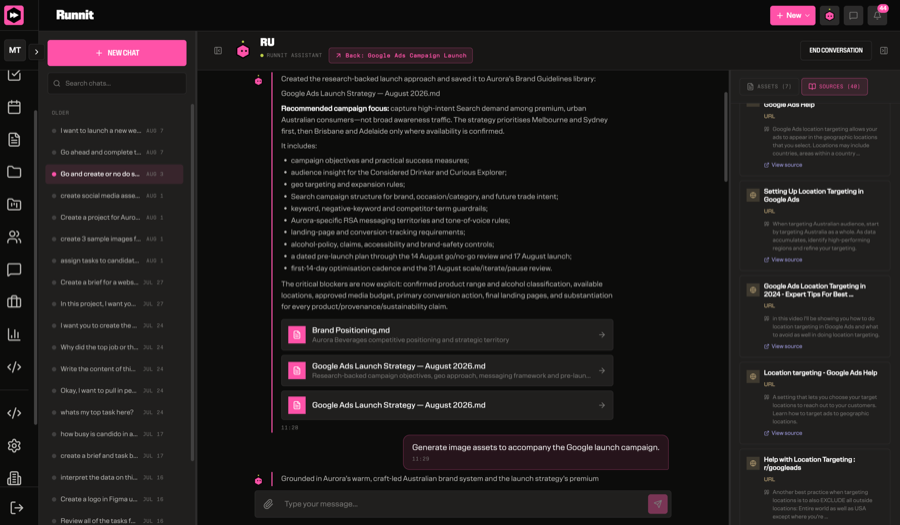
One source of truth. Every assistant.
Whatever your team uses, and whatever it changes to next, Runnit's connectors
give it the same projects, the same clients and the same permissions. The work
lands in one place regardless of what did it.
Agentic tools are arriving fast, and every discipline is picking its own.
Designers have theirs, developers have theirs, and each assistant gets tuned
to how one person likes to work. That part is healthy. It only turns into a
problem when every tool starts keeping its own version of the truth.
So Runnit does not ask anyone to switch. Connect the assistant you already
use and it reads the same brief, the same client and the same plan as
everyone else, inside the same permissions. People stay free to choose their
tools. The organisation keeps one memory.
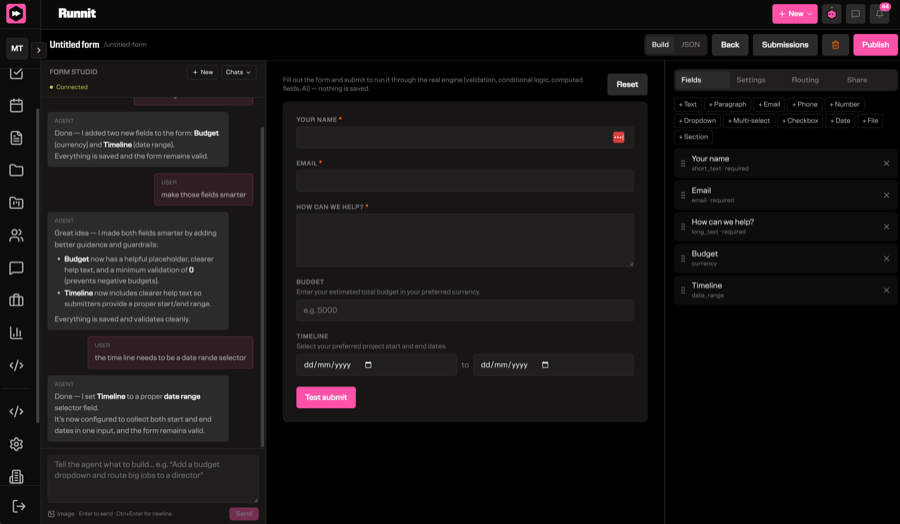
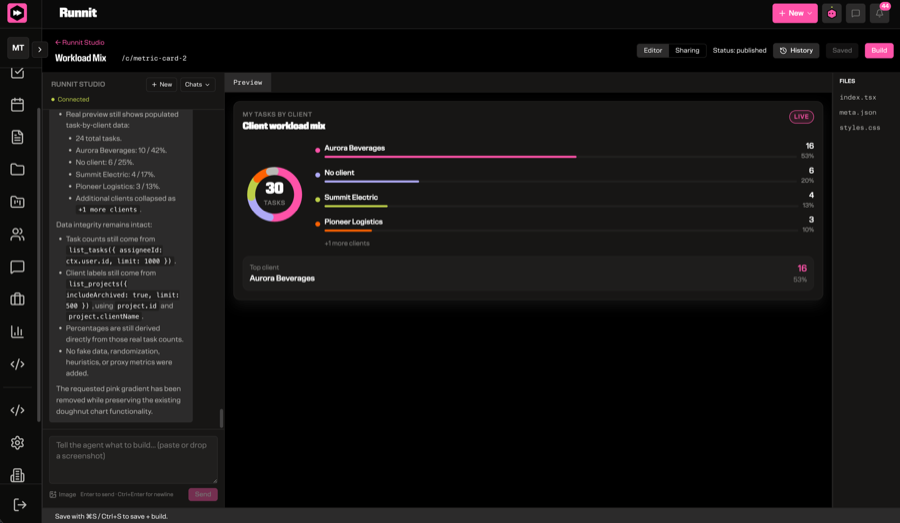
Describe it. It gets built.
Every organisation runs slightly differently, and every tool eventually asks
you to run its way instead. Runnit Studio is the answer to that: you describe
what you need and it exists.
A dashboard for the Monday leadership meeting, pulling live from your projects.
A work request form that routes anything over 50k to a director before it
reaches the team. An automation that drafts the brief, creates the project,
gets budget approved and takes it live. A widget on your dashboard showing the
projects where you actually have open tasks.
No code, no training, and no waiting on us to build it. Whatever your
organisation needs next, you describe it, and it's there the same afternoon.
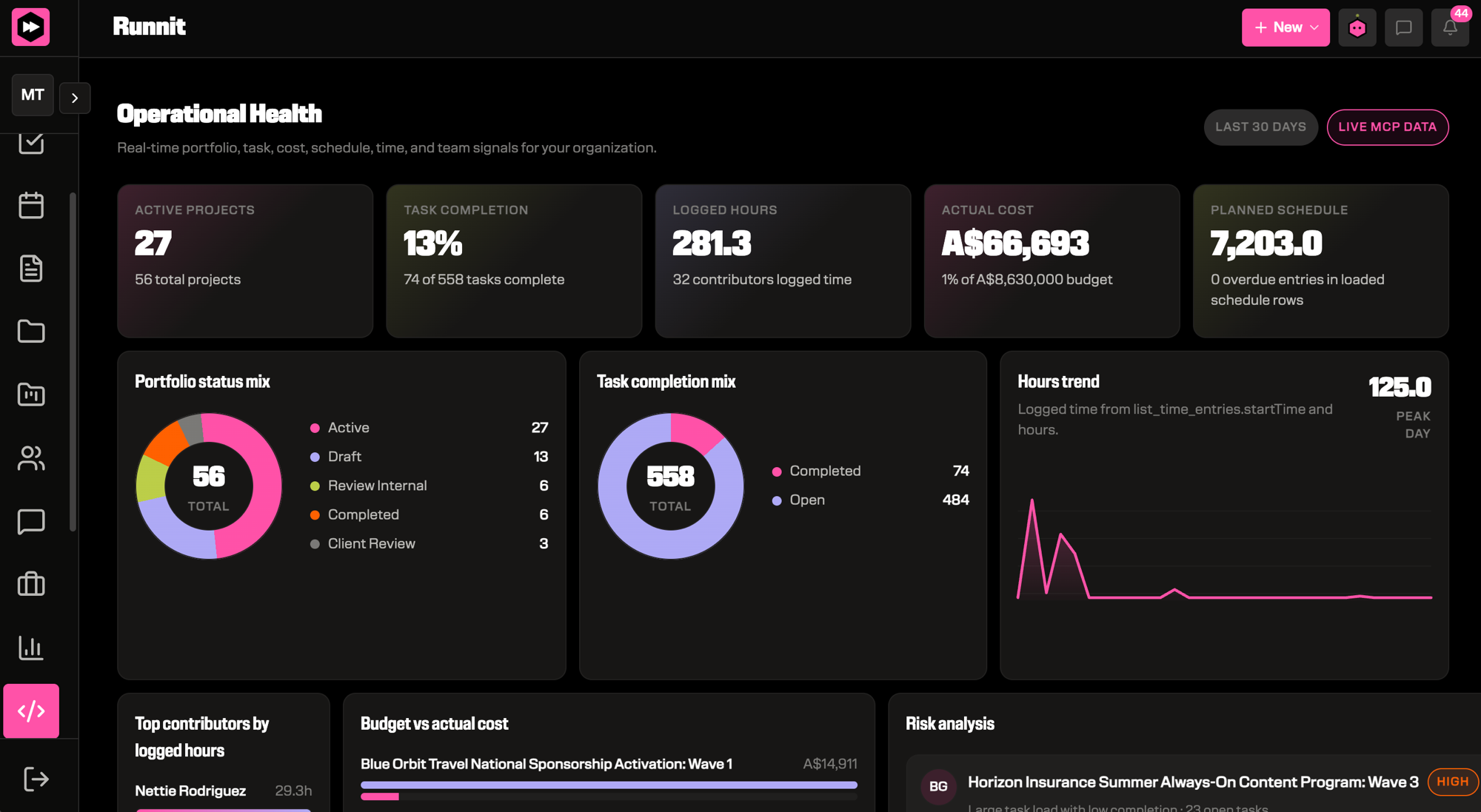
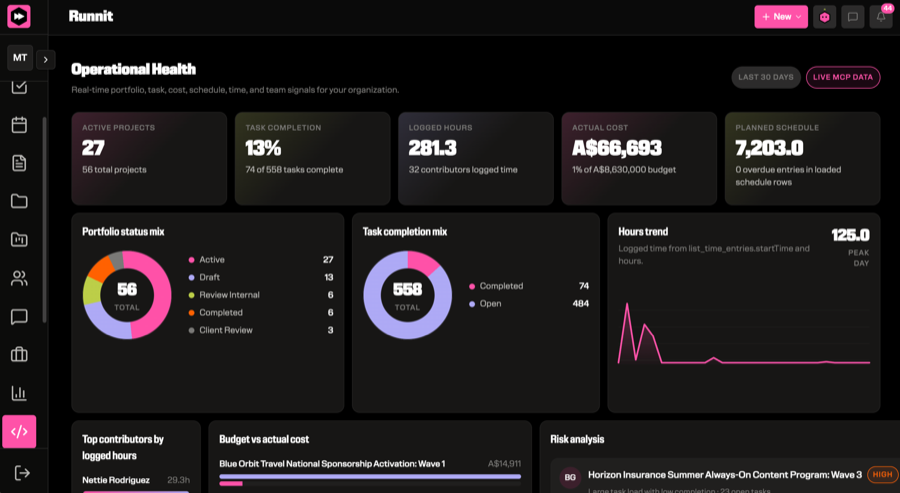
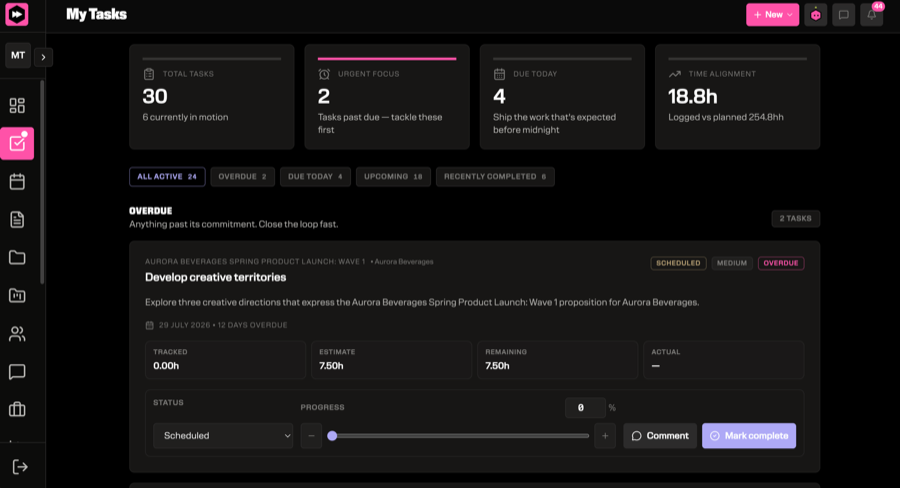
Every number, already counted
Revenue, profit, delivery, performance, workload and clients, all running off
the same logged time and the same captured rates. Nobody exports anything.
Nobody rebuilds a spreadsheet on a Monday.
Out of the box, you get the full read on how your teams are performing:
margin, utilisation, estimation accuracy, delivery health and client
profitability, live from real project data.
And when your question is not on a dashboard yet, describe it. Reports,
metrics and whole dashboards are generated on the fly from a prompt, built
from the same live numbers as everything else.
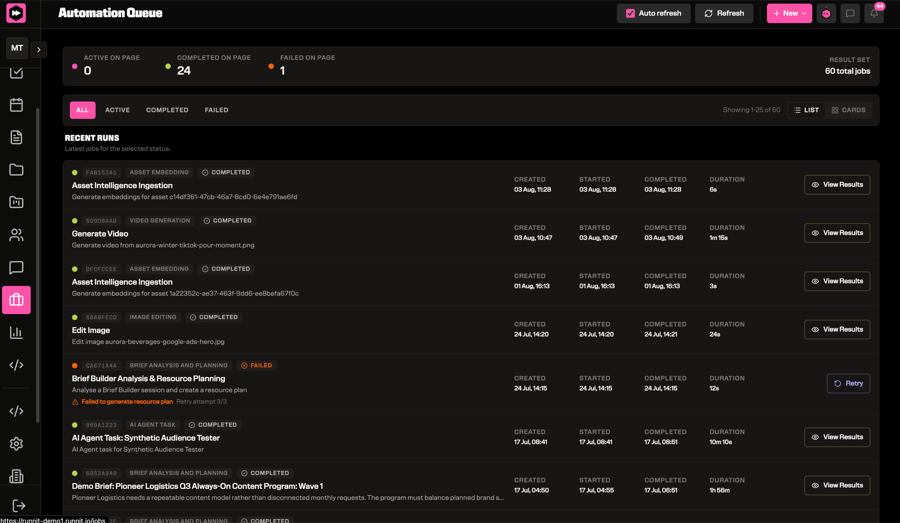
If it has an API, Runnit can work in it
Most tools integrate by syncing a field and calling it done. Runnit's
connectors go further: they let it carry out real work inside the systems you
already pay for, triggered by what's happening in the project.
A campaign gets approved, so the job number and purchase order are raised in
finance and the project opens in the ERP. The creative is signed off, so the
whole rollout is built to the client's media schedule in your design tool, and
the finished assets are filed into the DAM with their metadata already on them.
Copy is approved, so the sequence is scheduled in your marketing platform and
the placements are trafficked into the ad accounts. The plan changes, so the
client sees it in their project system, not in an email asking them to look at
yours.
Anything with an API is fair game: Figma, Jira, Salesforce, NetSuite, SAP,
HubSpot, Meta and Google Ads, SharePoint, Slack. The work happens where it's
supposed to happen, and Runnit still knows it happened.